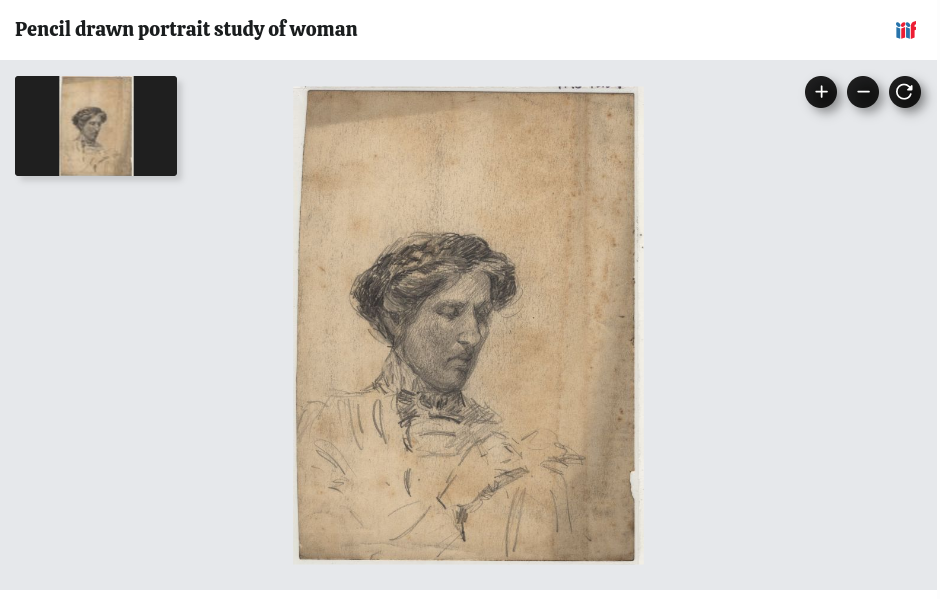
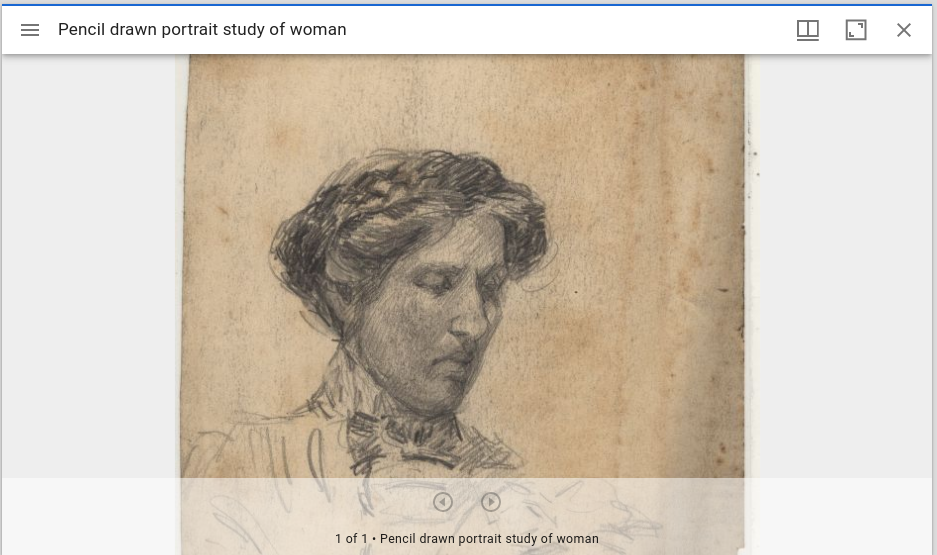
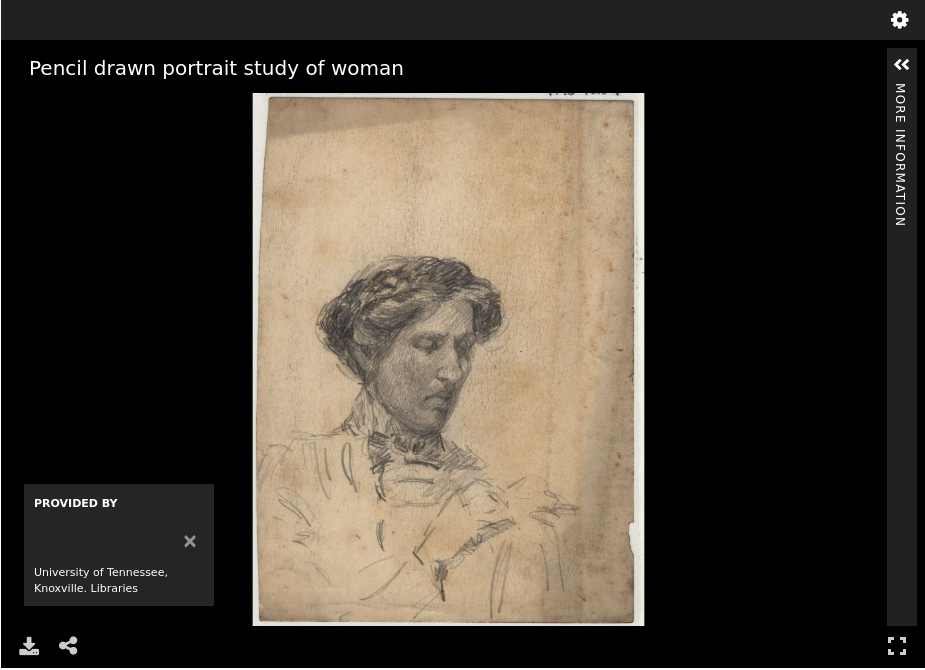
Large Image
About
In University of Tennessee Digital Collections, digital objects that are based on a JP2 or TIFF and can
stand alone in the wild with a metadata file are considered to be large images. Large images differ from pages in that
pages do not make sense outside of the context of the book. Like most other content types, large images can be a part of
a compound object.
Fedora Model
A large image has very few structural properties. In our current repository, it should always have a fedora-model:hasModel
stating its a large image and a fedora:isMemberOfCollection property stating its relationship to various collections.
@prefix fedora: <info:fedora/fedora-system:def/relations-external#> .
@prefix fedora-model: <info:fedora/fedora-system:def/model#> .

<info:fedora/acwiley:280> fedora-model:hasModel <info:fedora/islandora:sp_large_image_cmodel> ;
    fedora:isMemberOfCollection <info:fedora/collections:acwiley> .
As stated above, the object can also be part of 1 or more compound objects. In this case, it still has the same
fedora-model:hasModel relationship but also has a fedora:isConstituentOf relationship with an
islandora:isSequenceNumberOfpcard00_100201. See the section on compound objects for more information.
@prefix fedora: <info:fedora/fedora-system:def/relations-external#> .
@prefix fedora-model: <info:fedora/fedora-system:def/model#> .
@prefix islandora: <http://islandora.ca/ontology/relsext#> .

<info:fedora/100201:7> islandora:isSequenceNumberOfpcard00_100201 "2" ;
    fedora-model:hasModel <info:fedora/islandora:sp_large_image_cmodel> ;
    fedora:isConstituentOf <info:fedora/pcard00:100201> ;
    fedora:isMemberOfCollection <info:fedora/gsmrc:pcard00> .
IIIF Manifest
The IIIF manifest for an image inherits the basic format for other manifests. For more information, see Base Manifest.
The items property of the manifest for a Large Image has one canvas that points at its large image. The
Canvas should have id, type, label, thumbnail, width, height,
and items properties following the IIIF Presentation v3 specification. Cantaloupe provides as the source for
values related to thumbnail, width, and height.
 1  "items": [
 2    {
 3      "id": "https:\/\/digital.lib.utk.edu\/assemble\/manifest\/acwiley\/280\/canvas\/0",
 4      "type": "Canvas",
 5      "label": {
 6        "none": [
 7          "Pencil drawn portrait study of woman"
 8        ]
 9      },
10      "thumbnail": [
11        {
12          "id": "https:\/\/digital.lib.utk.edu\/iiif\/2\/collections~islandora~object~acwiley%3A280~datastream~TN\/full\/max\/0\/default.jpg",
13          "width": 147,
14          "height": 200,
15          "service": [
16            {
17              "@id": "https:\/\/digital.lib.utk.edu\/iiif\/2\/collections~islandora~object~acwiley%3A280~datastream~TN",
18              "@type": "http:\/\/iiif.io\/api\/image\/2\/context.json",
19              "@profile": "http:\/\/iiif.io\/api\/image\/2\/level2.json"
20            }
21          ],
22          "type": "Image",
23          "format": "image\/jpeg"
24        }
25      ],
26      "width": 4728,
27      "height": 6450,
28    }
The items property on the Canvas consists of one AnnotationPage. An AnnotationPage is
an ordered list of annotations. The AnnotationPage has an id, type, and items property.
In the Large Image work type, the items property on the AnnotationsPage has one Annotation.
Annotations associate content resources with Canvases. The same mechanism is used for the visible and/or audible
resources as is used for transcriptions, commentary, tags and other content. This provides a single, unified method for
aligning information, and provides a standards-based framework for distinguishing parts of resources and parts of
Canvases.
The Annotation has id, type, motivation, body, and target properties.
Annotations that add the primary content to viewer always have th motivation of painting. The body
property is populated primarily by the Cantaloupe Image API response and the Annotation targets the canvas with the
target property.
You can see a complete Annotation for the large image work type here:
 1            {
 2              "id": "https:\/\/digital.lib.utk.edu\/assemble\/manifest\/acwiley\/280\/canvas\/0\/page\/acwiley%3A280\/627295d038cb7",
 3              "type": "Annotation",
 4              "motivation": "painting",
 5              "body": {
 6                "id": "https:\/\/digital.lib.utk.edu\/iiif\/2\/collections~islandora~object~acwiley%3A280~datastream~JP2\/full\/full\/0\/default.jpg",
 7                "type": "Image",
 8                "width": 4728,
 9                "height": 6450,
10                "format": "image\/jpeg",
11                "service": [
12                  {
13                    "@id": "https:\/\/digital.lib.utk.edu\/iiif\/2\/collections~islandora~object~acwiley%3A280~datastream~JP2",
14                    "@type": "http:\/\/iiif.io\/api\/image\/2\/context.json",
15                    "profile": "http:\/\/iiif.io\/api\/image\/2\/level2.json"
16                  }
17                ]
18              },
19              "target": "https:\/\/digital.lib.utk.edu\/assemble\/manifest\/acwiley\/280\/canvas\/0"
20            }
For more information, see Additional types.
Viewing Experience
Large images work similarly in a variety of IIIF viewers.