Compound Objects
About
In University of Tennessee Digital Collections, digital objects that are made up of multiple works of various work types
that can all stand alone in the wild are considered to be Compound Objects. Compound Objects are not
historically considered to be paged and instead seen as related individuals. Compound Objects are different from
Books in these regards since Books are paged and are made up of only Pages. Since the works
that make up Compound Objects can stand alone in the wild, they should not only be indexed but also found in OAI
and as members of IIIF collections.
Fedora Model
Compound objects always have properites describing their work type and the collection(s) in which they belong. There parts also have these properties plus a property for describing the compound object(s) of which they belong plus unique properties that describe how they are ordered in a specific compound object. For this reason, a Work could be a member of multiple compound objects.
@prefix fedora: <info:fedora/fedora-system:def/relations-external#> .
@prefix fedora-model: <info:fedora/fedora-system:def/model#> .
@prefix islandora: <http://islandora.ca/ontology/relsext#> .

<info:fedora/rftaart:74> fedora-model:hasModel <info:fedora/islandora:compoundCModel> ;
    fedora:isMemberOfCollection <info:fedora/collections:rftaart>,
        <info:fedora/collections:rftacuratedart> .

<info:fedora/rftaart:42> islandora:isSequenceNumberOfrftaart_74 "1" ;
    fedora-model:hasModel <info:fedora/islandora:sp_large_image_cmodel> ;
    fedora:isConstituentOf <info:fedora/rftaart:74> ;
    fedora:isMemberOfCollection <info:fedora/collections:rftaart> .

<info:fedora/rftaart:51> islandora:isSequenceNumberOfrftaart_74 "2" ;
    fedora-model:hasModel <info:fedora/islandora:sp_videoCModel> ;
    fedora:isConstituentOf <info:fedora/rftaart:74> ;
    fedora:isMemberOfCollection <info:fedora/collections:rftaart> .
IIIF Manifest
The IIIF manifest for a Compound Object work inherits the basic format for other manifests. For more information, see
Base Manifest.
The IIIF manifest for a Compound Object most closely follows that of a Book. Like it, the
Compound Object has a behavior property, but this time its array includes the string value
individuals meaning that the included Canvases of the work are distinct views, and should not be presented in a
page-turning interface.
Similarly, like Book, the items property can consist of many canvases. Like all Canvases, the contents
of the canvas has properties like id and type, but the details of most property values are dictated by
the work type of the Work the Canvas is based on. For instance, if the Canvas is based on a video,
it too will likely have a annotations property that points at its transcript(s).
 1  "items": [
 2    {
 3      "id": "https:\/\/digital.lib.utk.edu\/assemble\/manifest\/rftaart\/74\/canvas\/1",
 4      "type": "Canvas",
 5      "label": {
 6        "none": [
 7          "Topper"
 8        ]
 9      },
10      "annotations": [
11        {
12          "id": "https:\/\/digital.lib.utk.edu\/assemble\/manifest\/rftaart\/74\/canvas\/1\/page\/annotation\/rftaart:51",
13          "type": "AnnotationPage",
14          "items": [
15            {
16              "id": "https:\/\/digital.lib.utk.edu\/assemble\/manifest\/rftaart\/74\/canvas\/1\/page\/annotation\/rftaart:51\/627d67309430e",
17              "type": "Annotation",
18              "motivation": "supplementing",
19              "body": {
20                "id": "https:\/\/digital.lib.utk.edu\/collections\/islandora\/object\/rftaart:51\/datastream\/TRANSCRIPT",
21                "type": "Text",
22                "format": "text\/vtt",
23                "label": {
24                  "en": [
25                    "Captions in English"
26                  ]
27                },
28                "language": "en"
29              },
30              "target": "https:\/\/digital.lib.utk.edu\/assemble\/manifest\/rftaart\/74\/canvas\/1"
31            }
32          ]
33        }
34      ],
35    }
36  ],
For details on the various types that can make up a canvas, see Audio, Large Image, or Videos.
Compound Object manifests are also different in that their Canvases have descriptive properties like
metadata, summary, rights, and requiredStatement.
  1  "items": [
  2    {
  3      "id": "https:\/\/digital.lib.utk.edu\/assemble\/manifest\/rftaart\/74\/canvas\/1",
  4      "type": "Canvas",
  5      "label": {
  6        "none": [
  7          "Topper"
  8        ]
  9      },
 10      "summary": {
 11        "en": [
 12          "This video examines Danny Wilson's artwork \"Topper\", which was inspired by the experiences of Adesola Odunayo and Leslie Wereszczak during the Chimney Tops 2 Wildfires. Both Odunayo and Wereszczak, who work at UT College of Veterinary Medicine, mentioned one particular cat named Topper in their oral histories. He was the most severely burned of nearly 20 \u201cfirecats\u201d that were treated in Emergency Critical Care at UTCVM. Topper had severe face and foot pad burns, but \u201che was a trooper.\u201d He and his owner had a happy reunion three days later. Topper\u2019s story spread and resulted in a Facebook page for people to follow his recovery progress."
 13        ]
 14      },
 15      "metadata": [
 16        {
 17          "label": {
 18            "en": [
 19              "Date"
 20            ]
 21          },
 22          "value": {
 23            "en": [
 24              "April 11, 2022"
 25            ]
 26          }
 27        },
 28        {
 29          "label": {
 30            "en": [
 31              "Format"
 32            ]
 33          },
 34          "value": {
 35            "en": [
 36              "motion pictures (visual works)"
 37            ]
 38          }
 39        },
 40        {
 41          "label": {
 42            "en": [
 43              "Extent"
 44            ]
 45          },
 46          "value": {
 47            "en": [
 48              "00:06:23"
 49            ]
 50          }
 51        },
 52        {
 53          "label": {
 54            "en": [
 55              "Subject"
 56            ]
 57          },
 58          "value": {
 59            "en": [
 60              "Wildfires",
 61              "Cats",
 62              "Disasters in art"
 63            ]
 64          }
 65        },
 66        {
 67          "label": {
 68            "en": [
 69              "Description"
 70            ]
 71          },
 72          "value": {
 73            "en": [
 74              "This video examines Danny Wilson's artwork \"Topper\", which was inspired by the experiences of Adesola Odunayo and Leslie Wereszczak during the Chimney Tops 2 Wildfires. Both Odunayo and Wereszczak, who work at UT College of Veterinary Medicine, mentioned one particular cat named Topper in their oral histories. He was the most severely burned of nearly 20 \u201cfirecats\u201d that were treated in Emergency Critical Care at UTCVM. Topper had severe face and foot pad burns, but \u201che was a trooper.\u201d He and his owner had a happy reunion three days later. Topper\u2019s story spread and resulted in a Facebook page for people to follow his recovery progress."
 75            ]
 76          }
 77        },
 78        {
 79          "label": {
 80            "en": [
 81              "Language"
 82            ]
 83          },
 84          "value": {
 85            "en": [
 86              "English"
 87            ]
 88          }
 89        },
 90        {
 91          "label": {
 92            "en": [
 93              "Editor of compilation"
 94            ]
 95          },
 96          "value": {
 97            "en": [
 98              "Morgan, Josh"
 99            ]
100          }
101        },
102        {
103          "label": {
104            "en": [
105              "Interviewee"
106            ]
107          },
108          "value": {
109            "en": [
110              "Odunayo, Adesola",
111              "Wereszczak, Leslie",
112              "Wilson, Danny"
113            ]
114          }
115        }
116      ],
117      "rights": "http:\/\/rightsstatements.org\/vocab\/InC\/1.0\/",
118      "requiredStatement": {
119        "label": {
120          "en": [
121            "Provided by"
122          ]
123        },
124        "value": {
125          "en": [
126            "University of Tennessee, Knoxville. Libraries"
127          ]
128        }
129      }
130    }
131  ],
This is because parts of Compound Objects can live in the wild and have their own descriptive properties.
Viewing Experience
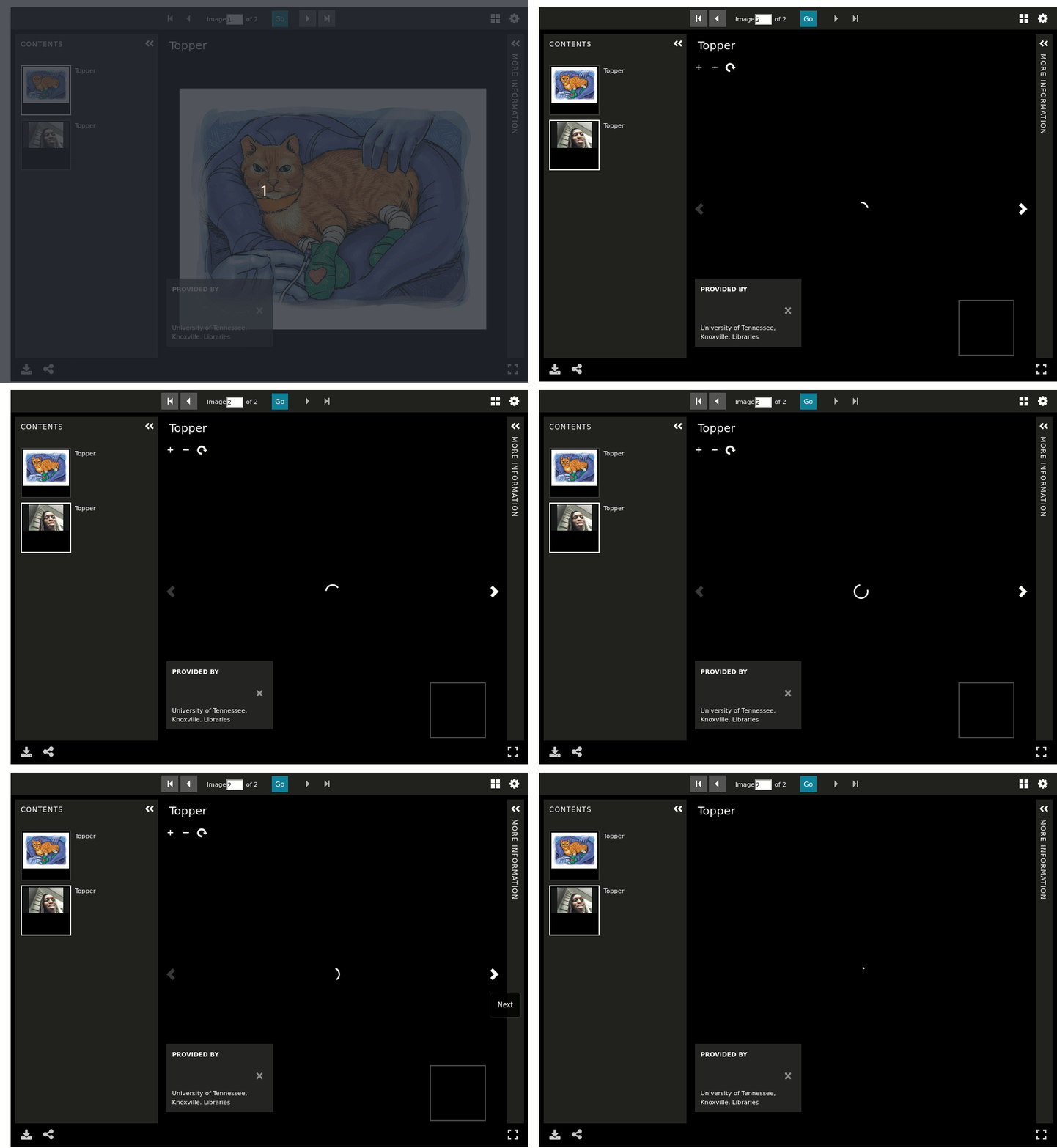
Our compound objects will render in a variety of viewers. They work just as you’d expect if all canvases are image-like. When they canvases are mixed, results are mixed.
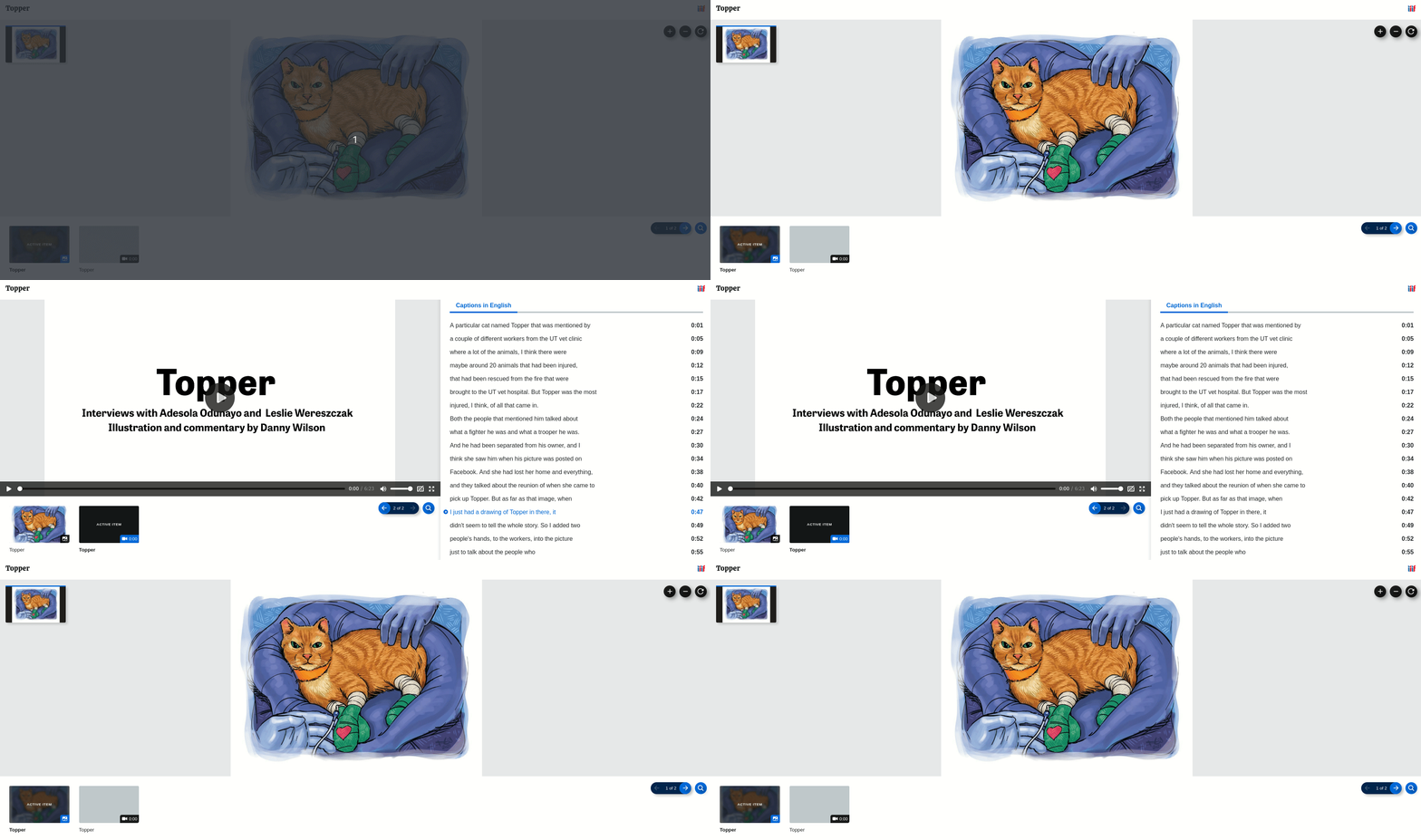
In Clover, our compound objects work just like you’d expect.
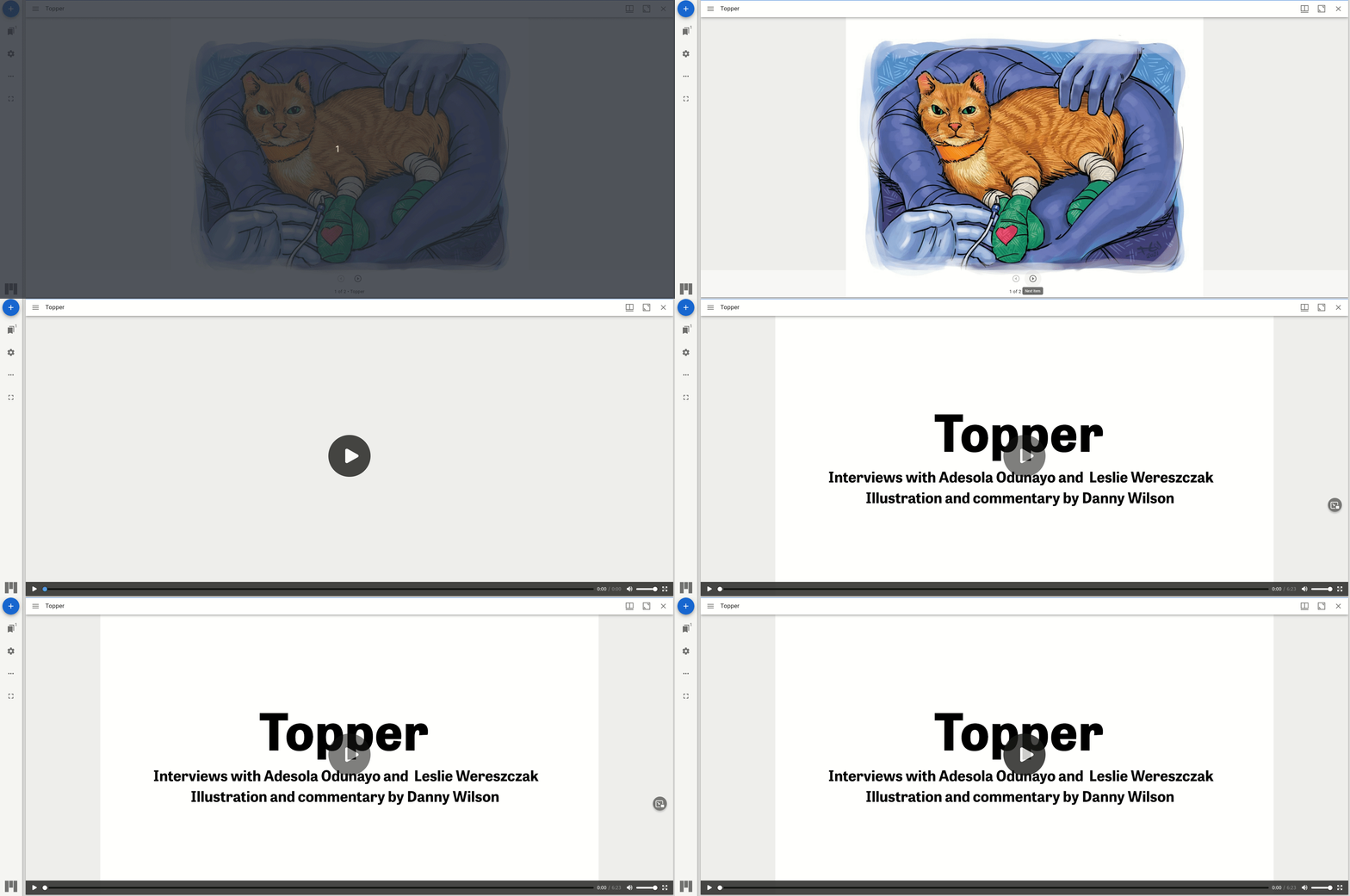
In Mirador, everything works but with no transcripts for audio or video. Also, navigation gets a little weird when an audio or video manifest is encountered.
In Universal Viewer, compound objects work as long as there and no audio or video canvases.